

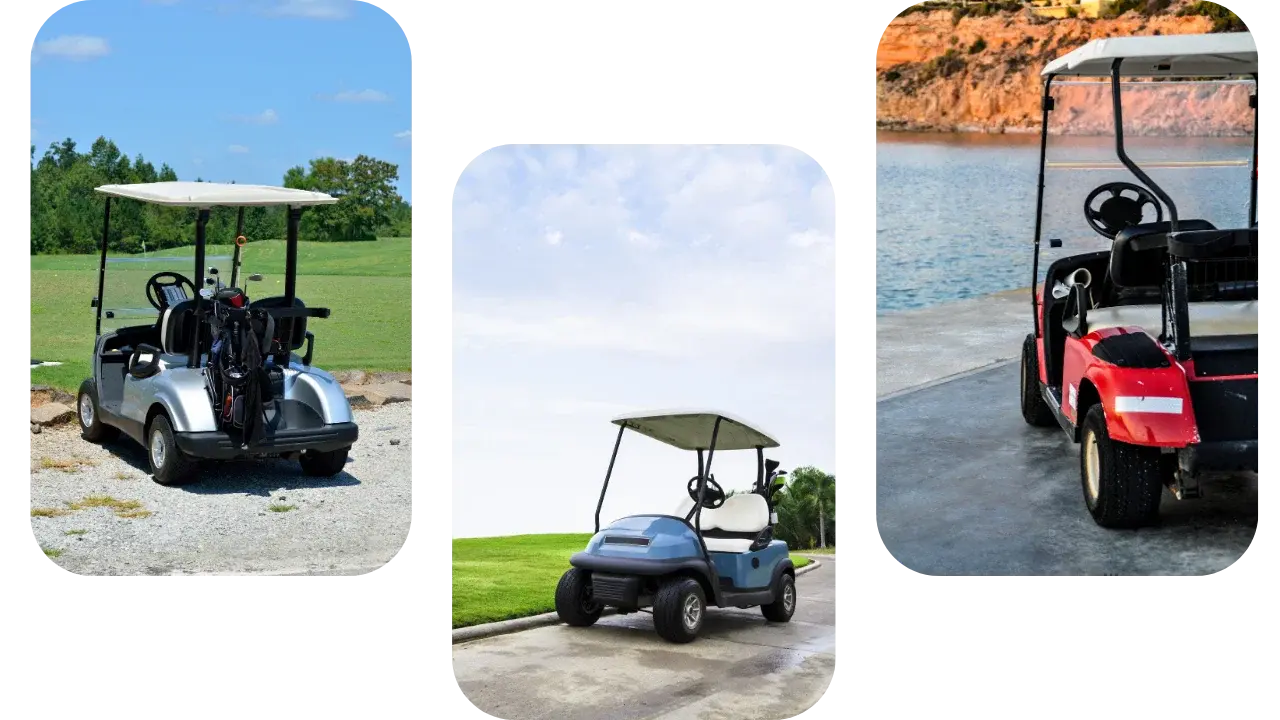
Upgrading your golf cart is no longer limited to the greens. Whether you use your cart for golfing, navigating a large property, or cruising around a master-planned community, customizing its appearance is a top priority for many owners. While custom paint jobs were once the standard, vinyl wrapping has quickly become the preferred method for transforming a golf cart's look.
But before you dive into squeegees and heat guns, you likely have some foundational questions. How much does it cost to wrap a golf cart? How much vinyl material do you actually need? And can you successfully wrap that textured plastic roof?
In this comprehensive guide, we will break down the costs, exact material sizing, the reality of the DIY challenge, and the science behind wrapping your golf cart’s roof.

1. How Much Does It Cost to Wrap a Golf Cart?
When deciding to wrap your golf cart, the first question is usually about the budget. The cost to wrap a golf cart depends heavily on whether you choose the DIY route or hire a professional vehicle wrap shop.
Professional Installation vs. DIY Costs
If you hire a professional, you are paying for their expertise, flawless finish, and labor time. If you do it yourself, your only costs are the raw materials and some basic tools.
Here is a breakdown of the estimated costs:
| Wrapping Method | Estimated Cost Range | What is Included |
|---|---|---|
| Professional Wrap | $350 – $700+ | Material, surface prep, professional labor, and warranty. |
| DIY Vinyl Wrap | $100 – $250 | High-quality vinyl roll (3M or Avery), basic squeegee, and blade. |
| Pre-Cut Wrap Kits | $150 – $350 | Vinyl pre-cut to your specific cart model's dimensions. |
Note: Prices can fluctuate based on the type of vinyl you choose (e.g., color-shifting, chrome, or textured carbon fiber vinyls are more expensive than standard gloss colors).
Eco-Friendly Bonus: Unlike traditional automotive paint, vinyl wrapping does not release harmful Volatile Organic Compounds (VOCs) into the air during application. According to the Environmental Protection Agency (EPA), minimizing exposure to VOCs from paints and solvents is crucial for environmental and respiratory health, making vinyl a safer and greener alternative.
2. Material Sizing: How Much Vinyl Do You Need for a Golf Cart?

One of the most common mistakes beginners make is ordering the wrong amount of material. So, how many square feet of vinyl do you need for a golf cart?
To wrap a standard two-seater golf cart (such as an EZ-GO, Club Car, or Yamaha), you will generally need 40 to 50 square feet of vinyl material.
Standard Roll Dimensions
Vinyl wrap is typically sold in rolls that are 5 feet (60 inches) wide.
-
For a standard 2-passenger cart: A 5ft x 10ft roll (50 sq ft) is the industry standard. This provides enough material to cover the front cowl, the rear body panels, and leaves a small margin for error.
-
For an extended 4-passenger or 6-passenger cart: You will likely need a 5ft x 15ft roll (75 sq ft) or a 5ft x 20ft roll (100 sq ft) to account for the extended rear body.
Pro Sizing Tip: Always apply the "Rule of Thirds" for beginners. Buy roughly 20% to 30% more material than your exact measurements dictate. If you make a mistake and overstretch a panel, having extra matching vinyl on hand will save your project.
3. The DIY Challenge: How Hard Is It to Wrap a Golf Cart Yourself?
You know the costs and the material size, but how hard is it to wrap a golf cart yourself?
The short answer: It is moderately difficult, but entirely achievable for a patient beginner.
Unlike wrapping a massive SUV with complex curves and massive doors, a golf cart is relatively manageable. The body panels are smaller and easier to work with. However, it is not as simple as putting a sticker on a laptop.
Factors That Affect DIY Difficulty:
-
Preparation is Crucial: 80% of a successful wrap job is cleaning. You must remove all dirt, wax, and grease.
-
Disassembly: To get a professional look, you must remove the headlights, taillights, roof struts, and seats. Wrapping around these parts instead of removing them leads to peeling edges.
-
Complex Curves: The hardest parts of a golf cart to wrap are the deep recesses (like the cup holder areas) and the sharp corners of the front cowl. These require careful heating and stretching techniques.
If you have patience, a heat gun, and a weekend to spare, DIY wrapping is a highly rewarding project. (Stay tuned for our upcoming step-by-step installation masterclass!)

4. Special Focus: Can You Wrap the Roof of a Golf Cart?
A frequent question we receive is: "Can I wrap my golf cart roof to match the body?"
The answer is Yes, but it requires special preparation and specific materials.
Most golf cart roofs are manufactured from molded, unpainted, textured plastic (often polyethylene or polypropylene). Standard automotive vinyl wraps (like standard 3M 2080 series) are designed to adhere to smooth, clear-coated paint. Standard vinyl will not stick to textured, raw plastic.
How to Successfully Wrap a Golf Cart Roof:
-
Sanding and Smoothing: You must sand down the heavy texture of the roof until it is completely smooth.
-
Adhesion Promoters: After sanding and cleaning, applying an automotive adhesion promoter (like 3M Primer 94) to the edges and deep channels is mandatory to prevent the vinyl from lifting.
-
High-Tack Vinyl: Instead of standard wrap, consider using "High-Tack" vinyl, which features a much stronger, more aggressive adhesive designed specifically for low-energy plastics.
Because wrapping a textured roof is labor-intensive, many owners choose to simply paint the roof using a plastic-bonding spray paint, reserving the premium vinyl wrap for the smooth body panels.

5. Elevate Your Wrap with Premium Accessories
A brand-new vinyl wrap completely revitalizes your golf cart, but the transformation shouldn't stop at the body panels. Once your cart looks pristine, worn-out accessories can stand out like a sore thumb.
Pairing your new wrap with upgraded, high-quality add-ons—such as custom steering wheels, tinted windshields, or upgraded seating—completes the custom look. For a massive selection of top-tier upgrades that perfectly complement your freshly wrapped ride, check out the extensive catalog at golfsignet.com. Upgrading your accessories is the final touch that turns a good-looking cart into a showstopper.

Frequently Asked Questions (FAQ)
Q: How long does a vinyl wrap last on a golf cart?
A: With proper care and by keeping it out of constant direct sunlight when not in use, a high-quality vinyl wrap can last anywhere from 5 to 7 years.
Q: Will a wrap damage the original paint of my golf cart?
A: No. In fact, vinyl wraps act as a protective barrier, shielding your original factory paint from UV rays, minor scratches, and golf course debris. When removed properly, the original paint will look exactly as it did before the wrap.
Q: Can I wrap over deep scratches or dents?
A: No. Vinyl wrap is incredibly thin and will actually contour to and highlight imperfections. If your golf cart has deep gouges or dents, you need to fill and sand them smooth before applying the vinyl.
Summary: Wrapping your golf cart is a cost-effective, environmentally friendly way to give your ride a completely custom identity. By understanding that you need roughly 50 square feet of material, setting a realistic budget, and knowing the limitations of wrapping a textured roof, you are perfectly positioned to start your customization journey.
Share: